Are BMI charts different for men and women?
Featured Research
When we step onto the digital scale at a health check center and our eyes instinctively drift toward the colorful BMI (Body Mass Index) chart on the wall, a crucial question is often overlooked: does this simple number mean exactly the same thing for men’s and women’s health?
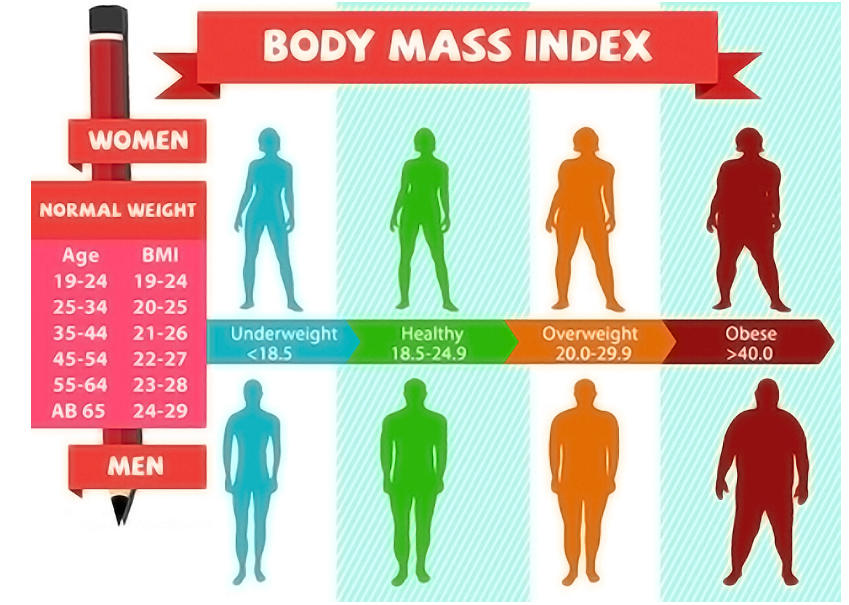
The BMI formula itself is indeed gender-neutral—body weight (in kilograms) divided by height (in meters) squared. However, behind this seemingly “fair” number lies a far more complex story shaped by biology, body composition, and differing health risk profiles between the sexes. This article takes a deeper look at the important relationship between BMI and gender differences, explaining why men and women use the same chart, yet may need entirely different perspectives when interpreting their health.
Key Difference 1: The Gender Gap in Body Composition — Muscle vs. Fat
The most fundamental difference begins with innate body structure. Men typically have a higher proportion of muscle mass and a lower percentage of body fat, while women naturally carry a higher proportion of fat tissue. Because muscle is denser than fat (muscle weighs about 18% more than fat by volume), this leads to a critical outcome: men and women with the same BMI can look—and be—very different physiologically.
A muscular male athlete and a woman with a higher body fat percentage may share the same BMI value, yet their body composition and health risks exist in entirely different realms. Research shows that at the same BMI, women have, on average, about 10% higher body fat than men. This is the primary reason BMI alone cannot fully capture an individual’s health status.
Key Difference 2: Fat Distribution and Health Risk — Apple vs. Pear Shapes
Even more important than how much fat we carry is where it is stored. Men tend to accumulate fat around the abdomen (often referred to as an “apple-shaped” body), with fat deposited around internal organs. Women, especially during their reproductive years, more commonly store fat around the hips and thighs (a “pear-shaped” body).
Medical evidence consistently shows that visceral fat—fat surrounding internal organs—is far more strongly associated with cardiovascular disease, type 2 diabetes, and metabolic syndrome than subcutaneous fat. As a result, two individuals of opposite sexes with the same “overweight” BMI (for example, 27) may face very different real-world health risks if the man’s fat is concentrated in the abdominal area.
Although the World Health Organization (WHO) uses unified BMI categories, it recommends supplementing BMI with waist circumference measurements (≥102 cm for men and ≥88 cm for women) to better account for these gender-specific risks. This recommendation implicitly acknowledges the importance of sex-based differences.
Key Difference 3: Hormones as the Architects of Fat Distribution
Sex hormones act as the “chief architects” of gender differences in fat distribution. Estrogen promotes fat storage in the hips and thighs, serving both as an energy reserve for reproduction and, to some extent, a form of metabolic protection. Testosterone, on the other hand, supports muscle growth and favors abdominal fat accumulation.
This hormonal blueprint changes significantly after menopause. As estrogen levels decline, women’s fat distribution gradually shifts toward a more “male” pattern, with increased abdominal fat and a corresponding rise in metabolic risk. This means that the health implications of a woman’s BMI can change over her lifetime, yet static BMI charts are unable to capture this dynamic risk evolution.
Key Difference 4: Gender-Specific Health Risk Curves — J-Shaped Patterns and Survival Advantages
Research has revealed notable sex differences in the relationship between BMI and all-cause mortality. In men, this relationship often follows a more pronounced J-shaped curve, where both very low and very high BMI levels significantly increase mortality risk. In women—particularly at higher BMI ranges such as “overweight”—the curve is sometimes flatter.
Some large-scale studies have even observed a survival advantage among mildly overweight older women, a phenomenon often referred to as the “obesity paradox.” These complex risk patterns strongly suggest that applying a single, absolute numerical threshold to define “healthy weight” for everyone oversimplifies the realities of human health.
Beyond the BMI Chart: How to Personalize Your Health Assessment
In clinical practice and personal health management, BMI should be viewed as a screening starting point, not a diagnostic endpoint. A comprehensive health evaluation should include:
* Sex and age: the essential context for interpreting all health data
* Waist circumference and waist-to-hip ratio: direct indicators of abdominal fat and key risk modifiers
* Body composition analysis: proportions of muscle, fat, and body water
* Metabolic markers: blood pressure, blood glucose, lipids, liver function
* Lifestyle and family history: physical activity, diet, and genetic background
True health wisdom lies in recognizing that health exists on a multidimensional spectrum. Gender is an important dimension—but not the only one. The goal is not to create separate BMI charts for men and women, but to shift from a single-number assessment to a personalized health profile.
Final Thoughts:
In our view, health is a multidimensional issue, and gender is just one of those dimensions. Rather than relying solely on BMI chart numbers for men and women, we should use them as a starting point and move toward a more personalized understanding of health.
FAQ:
1. Are healthy BMI ranges truly the same for men and women?
Currently, the WHO’s international BMI classifications (underweight, normal, overweight, obesity) do not distinguish between sexes. However, because men and women differ fundamentally in body composition and fat distribution, gender must be considered when assessing individual health risk. In practice, clinicians use additional tools—such as sex-specific waist circumference thresholds—to make more accurate evaluations.
2. Why do many men fall into the “overweight” BMI category but still look fit or muscular?
This highlights BMI’s main limitation: it cannot distinguish between muscle and fat. Men who engage in regular strength training often have greater muscle mass and higher body weight, pushing their BMI into the “overweight” range (24–27.9), even though their body fat percentage is low and their health is excellent. This phenomenon is especially common among athletes.
3. For women, does a normal BMI always mean good health?
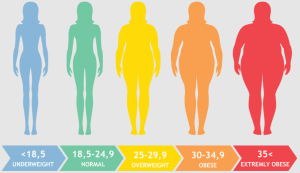
Not necessarily. There is a condition known as “normal-weight obesity”, where BMI falls within the normal range (18.5–24.9) but body fat is excessive and muscle mass is low. This situation—common among physically inactive women—can still be associated with metabolic health risks. Body composition is often more informative than BMI alone.
4. Why is waist circumference more meaningful than BMI alone?
Waist circumference directly reflects visceral fat accumulation, which is a major driver of insulin resistance, inflammation, and cardiovascular disease. Because men and women store fat differently (abdominal vs. hips/thighs), waist measurement is a powerful, gender-sensitive risk indicator. Even with a normal BMI, an elevated waist circumference signals increased health risk.
5. Should men and women focus on the same metrics during weight loss or fitness programs?
While core goals—such as improving metabolic health and cardiovascular fitness—are similar, priorities may differ. Men may benefit from focusing more on reducing waist circumference and visceral fat, while women should emphasize preserving and building muscle mass through strength training to boost metabolism and improve body shape. For both sexes, the number on the scale should never be the sole measure of success; changes in body fat, waist size, and overall well-being are far more meaningful.

Related Articles